

Wildlife Medicine Symposium

2026 Event Dates Announced
Join us! The Wildlife Symposium is set for September 4–6, 2026. Registration is now open.
For questions, please contact wildlifesymposium@lmc.edu
Wildlife medicine is a continuously growing field of veterinary medicine that impacts both our local communities and global human and ecological health systems. This year our symposium aims to present topics that span the breadth of this impact from the latest clinical wildlife medicine techniques to research and conservation efforts both local and abroad, encompassing a wide array of species. Speakers are seasoned experts in the fields of avian, exotic, zoological, aquatic, preventative health, and wildlife medicine. Eighteen (18.0) hours of continuing education are provided for veterinarians and veterinary technicians. Wildlife rehabilitators, veterinary technicians, students, and others interested in the above-mentioned fields are all welcome and encouraged to attend.
The North Carolina Wildlife Medicine Symposium is now a three-day conference! Earn 18 hours of continuing education in beautiful Banner Elk, North Carolina!


Cost
In Person
- Veterinarians: $450
- Veterinary technicians, wildlife rehabilitators, current students: $250
- Lees-McRae students: $75
Virtual Attendance Cost
- Veterinarians: $200
- Veterinary technicians, wildlife rehabilitators, current students: $100
The in-person cost covers a light breakfast and full lunch each day of attendance as well as an evening social.
Lodging
Symposium Schedule
Location: Tufts Room (North Carolina Buidling)
FRIDAY, SEPT. 4
| 9:30 a.m. | Check-in North Carolina Building |
|---|---|
| 10:00–10:50 a.m. | Pseudo-odontoma in Squirrel-like Rodents Dr. Dan H Johnson |
| 11:00–11:50 a.m. | The Tails and Tribulations of Rodent Rehab Dr. Sarah Reich |
| Noon–1:30 p.m. | Lunch Break |
| 1:30–2:20 p.m. | Documenting Wildlife Crime: The Importance of Rehab Centers Megan Stolen |
| 2:30–3:20 p.m. | Rapid Reptile Recovery: Trauma Treatment in Reptiles and Amphibians Dr. Sarah Reich |
| 3:30–4:20 p.m. | Ultrasound Imaging of Reptiles and Amphibians Dr. Megan Cabot |
| 4:30–5:20 p.m. | Clinical Decision-Making in Native Reptile Rehabilitation: Cases, Controversies, and Lessons Learned Dr. JB Minter |
SATURDAY, SEPT. 5
| 9:00–9:50 a.m. | Wildlife Anatomy: A Practical Overview and Favorite Radiographic Cases Dr. Amber McNamara |
|---|---|
| 10:00–10:50 a.m. | Feathers: Problems, Treatments, and Preventions Dr. Erica Miller |
| 11:00–11:50 a.m. | Do You Have the Map? Avian Migration: the Hows, the Whys (And so Many Unanswered Questions) Dr. Kendall Carlin |
| Noon–1:30 p.m. | Lunch Break |
| 1:30–2:20 p.m. | Bird Banding and Post-Release Monitoring Halley Buckanoff |
| 2:30–3:20 p.m. | Effects of Dextrose or Normobaric Oxygen on Avian Head Trauma Patient Outcomes Dr. Avery Berkowitz |
| 3:30–4:20 p.m. | American Black Bear Medicine, Research, Rehab Dr. Julie Sheldon |
| 4:30–6:00 p.m. | Break |
| 6:00–6:30 p.m. | Poster Session |
| 6:30–8:00 p.m. | Evening Social |
SUNDAY, SEPT. 6
| 9:00–9:50 a.m. | Don’t Sweat the Small Stuff – Anesthesia and Surgery Tips for Tiny Patients Dr. Avery Berkowitz |
|---|---|
| 10:00–10:50 a.m. | Evidence-Based Wildlife Analgesia Dr. Julie Sheldon |
| 11:00–11:50 a.m. | Raptors in Rehab – First Do No Harm Dr. Stephany Lewis |
| Noon–1:30 p.m. | Lunch |
| 1:30–2:20 p.m. | Fish Skin Grafts for the Treatment of Wounds in Raptors Dr. Tracey Ritzman |
| 2:30–3:20 p.m. | Secondary Anticoagulant Rodenticide Toxicosis in Birds of Prey Dr. Stephany Lewis |
| 3:30–4:20 p.m. | Raptor Ophthalmology and Ocular Injuries Dr. Amberly Sokoloff |
2026 Guest Speakers

Avery Berkowitz, DVM, CWR
Co-Founder, Maine Wildlife Rehabilitation (MWR)
Dr. Avery Berkowitz is a co-founder of a new wildlife center, Maine Wildlife Rehabilitation (MWR), in the Bangor, ME area. They graduated from Tufts Cummings School of Veterinary Medicine in 2020 and worked at rehabilitation centers in California, Nebraska, and New Mexico before moving to Maine. Their areas of particular interest include wildlife ophthalmology, avian orthopedics, and baby bird identification. They have appreciated the opportunity to experience wildlife rehab and biodiversity in various places across the country and are excited to continue building MWR in the years to come.

Halley Buckanoff, BS, CVT, CWR
Wildlife Center Supervisor, North Carolina Zoo’s Valerie H Schindler Wildlife Rehabilitation Center
Halley is the Wildlife Center Supervisor at the North Carolina Zoo’s Wildlife Rehabilitation Center overseeing rehabilitation practices, center operations, and mentoring of volunteers, interns, and students. Halley has worked in small animal, emergency, exotic, zoo, and wildlife veterinary medicine. She is currently holding a USFW banding permit and conducting post-release survival studies on commonly rehabilitated and reared backyard birds. She works with birds, herps, bears, and otters, just to name a few.

Kendall Carlin, DVM, CWR
Staff Veterinarian, Von Arx Wildlife Hospital
Kendall Carlin is the staff veterinarian at the Von Arx Wildlife Hospital in Naples, Florida. She started out cleaning cages at the Tufts Wildlife Clinic during veterinary school, not realizing it was going to turn into a full-time career in wildlife medicine. She feels lucky to work with her teammates, rehabilitating a diverse cross-section of native Florida wildlife including brown pelicans, raptors, gophers tortoises, and many opossums. She still cleans cages sometimes.

Dan H Johnson, DVM, DABVP (Exotic Companion Mammals)
Senior Associate Veterinarian, Avian and Exotic Animal Care
Dan Johnson is a 1992 graduate of North Carolina State University College of Veterinary Medicine. In 1996 he founded Avian and Exotic Animal Care, North Carolina’s first all-exotics practice. Dr. Johnson is a Diplomate of the American Board of Veterinary Practitioners (ABVP) specializing in exotic companion mammal practice and a Visiting Professor at St. George’s University School of Veterinary Medicine.

Stephany Lewis, DVM, CWR, DABVP (Avian Practice)
Clinical Assistant Professor of Zoological Medicine and Director of the Wildlife Medical Clinic, Department of Veterinary Clinical Medicine, University of Illinois
Stephany Lewis has been involved in wildlife rehabilitation since 2009. She received her DVM from Tufts University in 2015 and completed an internship in small animal medicine and surgery at Michigan State University. She then completed a 1-year internship in wildlife and conservation medicine at Tufts Wildlife Clinic in 2017. She has worked as the full-time staff veterinarian at California Wildlife Center and Ojai Raptor Center and is currently Clinical Assistant Professor and Director of the Wildlife Medical Clinic at the University of Illinois College of Veterinary Medicine. Dr. Lewis is a Certified Wildlife Rehabilitator by the International Wildlife Rehabilitation Council. In 2023 she became board certified in Avian Practice by the American Board of Veterinary Practitioners.

Erica Miller, DVM
Field Operations Manager, Wildlife Futures Program, University of Pennsylvania
Erica Miller worked full-time as a wildlife rehabilitation veterinarian for 25 years. She left wildlife rehabilitation in 2013 to explore some other areas of veterinary medicine, including work for New Jersey Fish & Wildlife, the Pennsylvania Game Commission, and the Brandywine Zoo. She is currently the Field Operations Manager with the University of Pennsylvania’s Wildlife Futures Program, but stays involved with wildlife rehabilitation at the Mercer County Wildlife Center.

Tracey K. Ritzman, DVM, DABVP (Avian & Exotic Companion Mammals)
Staff Veterinarian, Carolina Raptor Center
Dr. Ritzman graduated from North Carolina State University College of Veterinary Medicine in 1995. Dr. Ritzman is a board-certified specialist by the American Board of Veterinary Practitioners in Avian and Exotic Companion Mammal medicine and surgery. She enjoys working with non-traditional pets such as birds, ferrets, rabbits, rodents, reptiles and fish. Her clinical interests include avian wildlife medicine and surgery, endoscopy and avian nutrition. Dr. Ritzman is a staff veterinarian for the Carolina Raptor Center in Huntersville, North Carolina. She provides medical and surgery care to both wild injured raptors as well as the ambassador birds. Dr. Ritzman is also a veterinarian at Whole Pet Veterinary Hospital-Mountain Island in Charlotte, N.C. Dr. Ritzman is currently investigating the surgical use of fish skin grafts for the treatment of soft tissue wounds in raptor species.

Julie Sheldon, DVM, MS, DACZM
Clinical Assistant Professor of Zoological Medicine, University of Tennessee College of Veterinary Medicine
Dr. Julie Sheldon is a Clinical Assistant Professor of Zoological Medicine at the University of Tennessee and an ACZM diplomate. She earned her DVM from UC Davis, completed an internship at the University of Tennessee, followed by the Illinois Zoo and Aquatic Animal Residency program during which she earned a master’s degree studying avian lameness and analgesia. Dr. Sheldon is a clinical veterinarian for Zoo Knoxville, Tiger Haven, and Appalachian Bear Rescue and is a referral veterinarian for several other facilities in eastern TN. Her research focuses on free-ranging and rehabilitating black bear health, and mentors house officers and students on research and writing. Dr. Sheldon has participated in several wildlife field research projects in South America and teaches a clinical rotation at the Belize Zoo. When not working, she can be found mountain biking and trail running around Knoxville or exploring the Smoky Mountains.

Megan Cabot, DVM, DAZCM
Associate Veterinarian, North Carolina Zoo
Megan Cabot is an associate veterinarian at the North Carolina Zoo and board-certified specialist in zoological medicine through the ACZM. Her wildlife training started in vet school at Kansas State and continued through a year-long veterinary internship in wildlife rehabilitation medicine at CROW in Sanibel, Florida. She currently serves as one of the veterinarians for the native wildlife brought to the North Carolina Zoo's Wildlife Rehabilitation Center, alongside the resident animals at the North Carolina Zoo.

Amber McNamara, DVM, MHS (One Health)
Professor and Director of the Pre-Veterinary Mentoring Program, Martin-Gatton College of Agriculture, Food, and Environment, University of Kentucky
After earning her DVM from Purdue University in 2003, Dr. Amber McNamara completed a yearlong internship in wildlife medicine at the Clinic for the Rehabilitation of Wildlife (CROW) in Sanibel, Florida. A one-year commitment turned into eight years of employment; during that time, she earned certification as a veterinary acupuncturist and applied integrative medicine techniques to numerous wildlife patients. After leaving CROW as the Clinic Director in 2011, she spent the next two years in a mobile acupuncture and in-home euthanasia practice. She relocated to the North Carolina mountains in 2013 and spent more than a decade as a faculty member at Lees-McRae College. Working alongside students and staff at the May Wildlife Rehabilitation Center, she provided veterinary and rehabilitative care to over 1,500 injured wildlife patients admitted annually. In 2022, she completed a One Health-focused master’s degree from the University of Florida. In January 2024, she joined the University of Kentucky’s Martin-Gatton College of Agriculture, Food, and Environment as an Associate Professor and Director of the Pre-veterinary Mentoring program. At UK, she teaches several undergraduate courses and facilitated the development of a new Pre-Veterinary Medicine certificate program. She mentors pre-vet hopefuls of all majors, recently directed a Pre-Vet Camp for high schoolers, and is the faculty advisor for the new Wildcat Wildlife Society, a student-led wildlife and conservation club launching in Fall 2026. Outside of teaching and mentoring, she enjoys birdwatching, trivia, and woodworking.

Sarah Reich, DVM
Head Veterinarian, Dupage Wildlife Conservation Center (formerly Willowbrook Wildlife Center), Forest Preserve District of DuPage County
Dr. Sarah Reich graduated from the University of Illinois College of Veterinary Medicine in 2015. From there, she completed a small animal and exotics emergency internship in Milwaukee and then a wildlife medicine and conservation internship at Tufts Wildlife Center. She then returned to her alma mater to oversee the medical care at the University of Illinois Wildlife Medical Clinic. In 2019, she moved slightly north to become the head veterinarian at DuPage Wildlife Conservation Center (formerly Willowbrook Wildlife Center), a large rehabilitation center located in the Chicago suburbs. She is an advocate for growth and advancement, overseeing a nearly $30 million masterplan upgrade to the center, which was just completed in 2026. She is particularly interested in orthopedic surgery, wound management, and opossums (though she is a bird girl at heart).

JB Minter, MS, DVM, DACZM
Director of Animal Health, North Carolina Zoo
Dr. JB Minter is the Director of Animal Health and Chief Veterinarian at the North Carolina Zoo, where he serves on the Zoo’s senior leadership team and oversees the Zoo’s veterinary operations. Dr. Minter is a board-certified specialist in zoological medicine as a Diplomate of the American College of Zoological Medicine (ACZM). He has a special interest in anesthesia, amphibian nutrition, reproductive physiology, and the conservation and management of forest elephants in western Africa where he serves as a coordinator for an established field project monitoring the movement patterns of forest elephants in Cote d’Ivoire.

Amberly Sokoloff, VMD
Clinical Veterinary Fellow, Auburn University Raptor Center
Dr. Amberly Sokoloff grew up in Pennsylvania with a love of animals and music. She attended veterinary school at the University of Pennsylvania, completed an internship at a specialty referral center in Delaware, and then a residency in Avian and Exotic Pet Medicine and Surgery at the University of California, Davis. It was there that Dr. Sokoloff further developed a love of raptors, caring for birds at the California Raptor Center. Dr. Sokoloff joined the Auburn University Raptor Center in 2023 and is a Clinical Veterinary Fellow at the AU College of Veterinary Medicine. She is honored to provide top-tier medical and surgical treatment for rehabilitation patients and ambassador birds as well as to educate future veterinarians and veterinary technicians about how to care for these amazing animals. Dr. Sokoloff has co-authored multiple publications on companion and zoo exotic species and has lectured at conferences and CE events for veterinarians, veterinary students, technicians, and wildlife rehabilitators.

Megan Stolen, MSc
Senior Scientist, Blue World Research Institute
Megan Stolen is a senior scientist at Blue World Research Institute. She earned her BSc. and MSc. in Biological Sciences from the University of Central Florida and a second MSc. degree in Wildlife Forensic Science and Conservation from the University of Florida. She has worked as a marine mammal stranding investigator for over 30 years. In 2016, she developed a citizen science network to study North American river otters – Florida Otter Spotters, which collects data on live sightings and vehicle strikes. She conducts necropsies on a variety of Florida wildlife as a volunteer at Florida Wildlife Hospital. Her published papers span a variety of subjects including age estimation of cetaceans, health and contaminants in aquatic mammals, and population ecology. Her current research focuses on forensic decomposition, human-wildlife conflict and trauma in Florida wildlife and marine mammals. She is a Director of the International Society for Animal Forensic Science and a member of the Society for Wildlife Forensic Science, Society for Marine Mammalogy, The Wildlife Society, National Wildlife Rehabilitation Association and IUCN Otter Working Group.
About the May Wildlife Rehabilitation Center
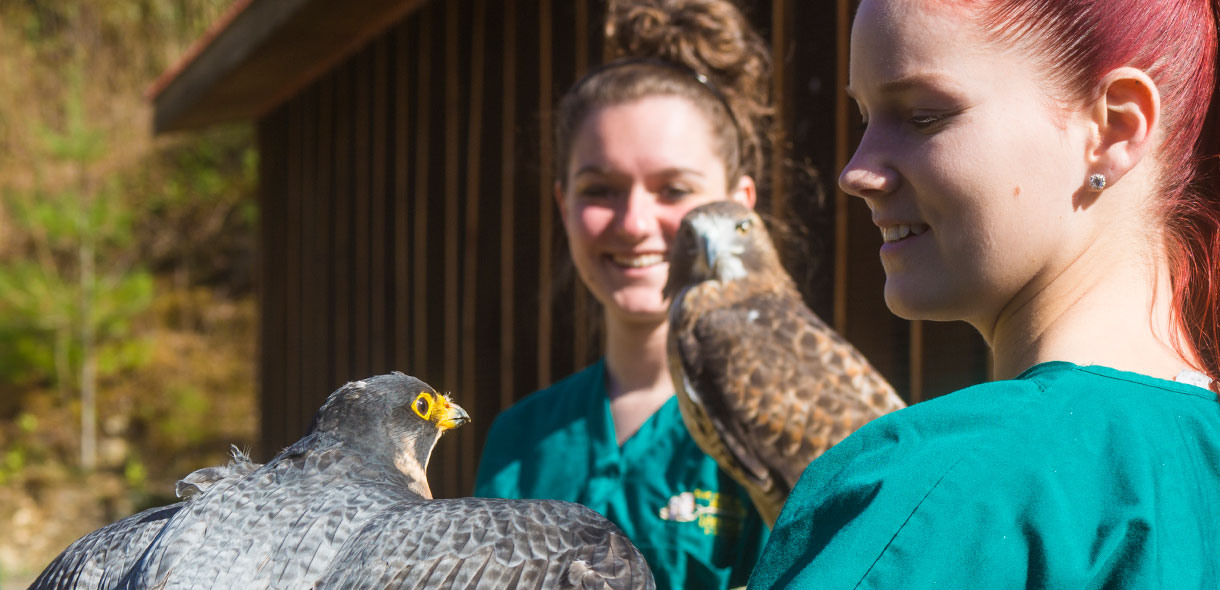
The Dan and Dianne May Wildlife Rehabilitation Center is situated adjacent to the Elk River on the campus of Lees-McRae College in Banner Elk, NC. The Center annually admits more than 2,000 injured and orphaned wildlife patients from the western part of North Carolina.
Under the guidance of Director Nina Fischesser and veterinarians Dr. Sam Young and Dr. Miranda Torkelson, students simultaneously contribute to the success of the rehabilitation program while engaging in a one-of-a-kind, hands-on learning experience. Open 365 days per year, students comprise a large portion of the rehabilitative operations at the Center.

Spend the Weekend
in Banner Elk
Banner Elk is a popular getaway in the Blue Ridge Mountains of the North Carolina High Country. It’s a place that blends small town relaxation with the amenities of a larger city.
Visitors enjoy a richness of culture and adventure. Within 15 minutes of the town’s lone stoplight you can experience the great outdoors, fabulous dining, theater and the arts, family attractions, and the two largest winter sports venues in the South. (via bannerelk.com)
With questions, contact wildlifesymposium@lmc.edu.