Senior Wildlife Biology major Jedda Levy is dedicated to spreading the word about snake health
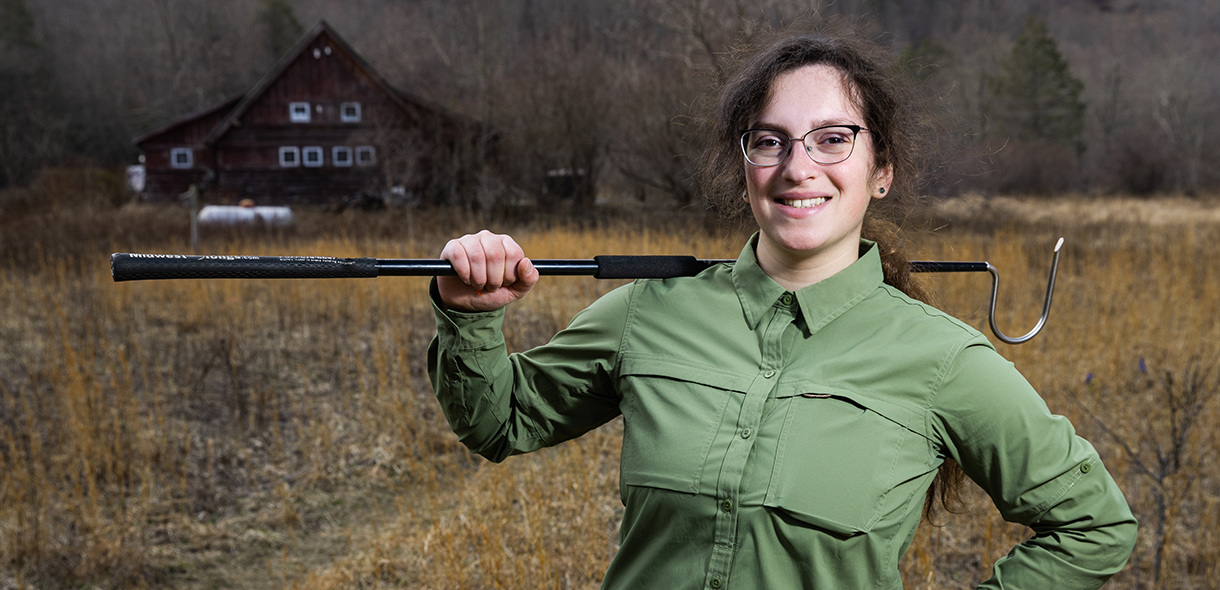
If one activity has defined senior Jedda Levy’s time at Lees-McRae, it might be catching snakes. The Wildlife Biology major has dedicated much of her last four years to conducting research in the Elk Valley Preserve about snake fungal disease, a study for which she has caught 169 snakes.
After a summer spent capturing, swabbing, and testing, she found cases of the disease—which she said is poorly documented, particularly in this region—in three different snake species in the Preserve.
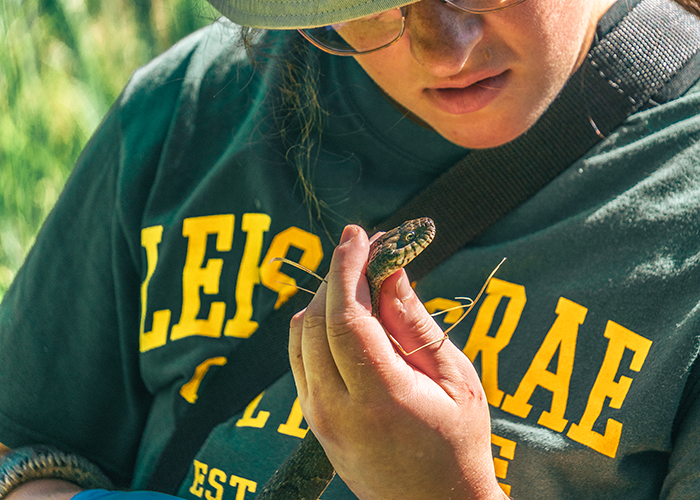 While capturing snakes for her research, Levy identified recaptures by examining their unique side profiles.
“Some of what I observed was similar to what other studies have found. About 30% of snakes I encountered showed snake fungal disease symptoms. All of those were concentrated on the ventral surface, so the belly of the snake, and that was pretty similar to what other studies found,” Levy said.
While much of her study focused on replicating preexisting research in the mountain setting, she did find something that surprised her. In addition to swabbing samples from snakes with active symptoms, Levy established a control group by collecting swabs from snakes that appeared healthy. Surprisingly, one such “control” snake came back testing positive for snake fungal disease, suggesting that there are latent carriers who do not get sick or present symptoms.
Since completing data collection in late summer 2024, Levy has presented her research and shifted into a more analytical stage. While in the field she focused on gathering qualitative data, but now—with a more in-depth understanding of statistics and analytics thanks to her statistical computing class—Levy said she has begun converting her findings into quantitative data points.
For Levy, hands-on learning like the research she has been able to conduct in the Elk Valley Preserve has made a world of difference in both her academic and personal journey at Lees-McRae.
“I’m definitely a hands-on learner, and that’s something that Lees-McRae is very good at facilitating. I don’t really learn unless I’m actively doing it, and there’s really no better way than to plan your study, go out and do it hands-on, and then manage the data somewhat independently,” Levy said. “As a Wildlife Biology student looking for jobs, something really great about being able to do that is it’s great to put on your resume. You can say, ‘Oh, I took a herpetology class,’ and that’s good. Those are definitely classes you want to take, but I can also say I went out and took 13 swabs and caught over 100 snakes and took field notes and went through this much data in Excel. Employers are really looking for that experience.”
Following graduation Levy will switch her focus from one reptile to another as she begins an internship with the Turtle Survival Center (TSC) in South Carolina. TSC is a conservation organization that is home to more than 800 turtles and tortoises across 27 different species, including some critically endangered species that are no longer found in the wild.
She will work with TSC until August, after which Levy plans to work in a variety of seasonal positions around the country with the eventual goal of returning to school for a graduate education.
Whether at Lees-McRae, the Turtle Survival Center, or beyond, Levy’s biggest goal is to continue to serve as a connection between people and animals. Throughout her time at Lees-McRae, she has grown to deeply value the role she plays in encouraging people to care about the plants and animals around them.
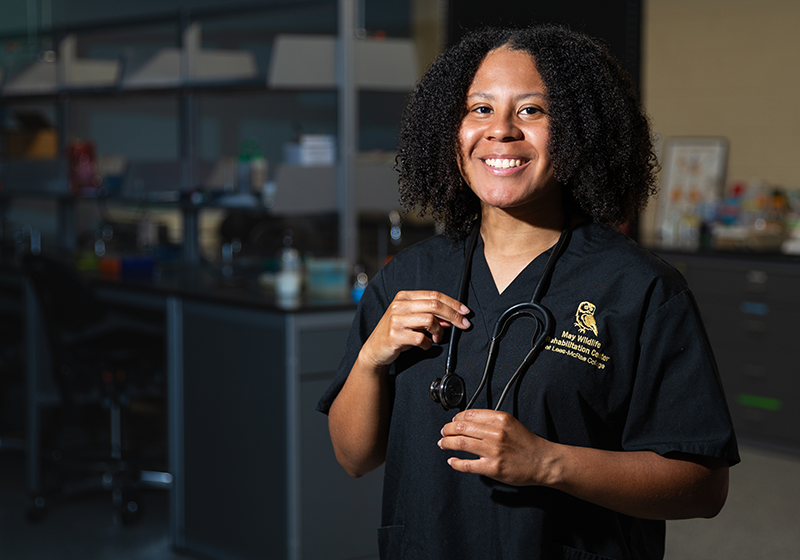
“I never thought, coming into college, that I would be able to stand in front of a crowd of 80–100 people and talk about an animal with a hawk on my hand. That has been one of the most impactful aspects for me, because I feel like I’ve been able to reach so many people both in elementary schools through the May Wildlife Rehabilitation Center, but also on campus,” Levy said. “I love snakes, we all know that, but a lot of people are afraid and just don’t really understand them. Being able to be that bridge between snakes and people is really important to me. I can study snake fungal disease, but if nobody cares about or respects snakes, what does it matter? We need everybody to be on the same page about protecting the beautiful natural resources we have here in the mountains.”
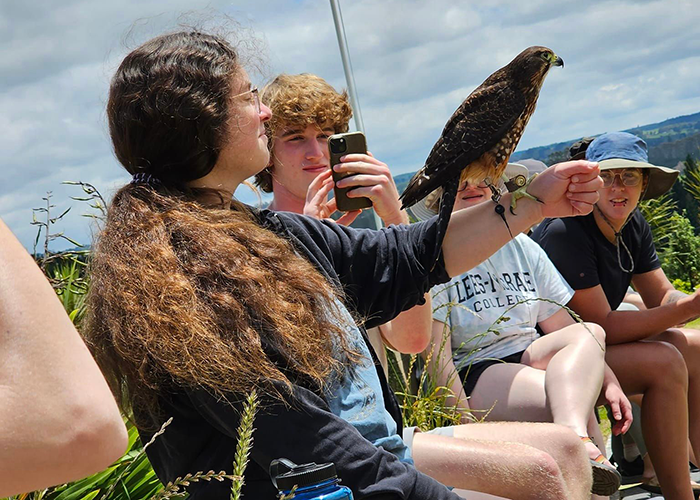 In December 2023 Levy participated in a Wildlife Biology trip to New Zealand where students learned about new experiences and landscapes first-hand.