Forensic Science specialization offers new pathway for Criminal Justice and Biology students
Beginning Fall 2026, students in the college’s Criminal Justice and Biology programs will have a new specialization to add to their majors. Forensic Science is a cross-disciplinary specialization that will expand the potential career paths of students in both fields and create new opportunities for experiential learning.
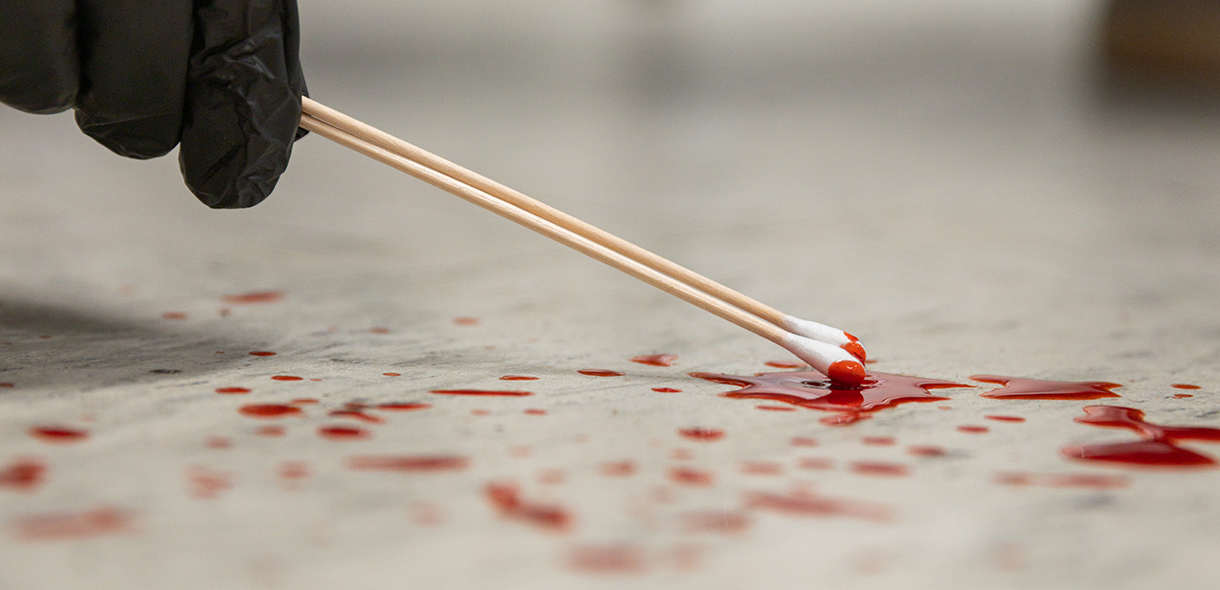
Assistant Dean of Education and Social Sciences Jerry Turbyfill is piloting the specialization’s first course, Forensics (CRI 270), this semester, providing students with a crash course on the many facets of the discipline. The course includes learning to file search warrants and create crime scene sketches, collecting fingerprints, DNA, and hair and fiber evidence, analyzing blood splatter, understanding computer and cell phone evidence, and more.
“This course is the most experiential one that I teach,” Turbyfill said. “It should be a pretty fascinating course. There’s so much material here that it could be 10 courses, but we have to just touch on each one.”
In addition to the course requirements for the Criminal Justice and Biology majors, students earning the Forensic Science specialization take Turbyfill’s course, along with Human Anatomy and Physiology (BIO 271), Forensic Genetics (BIO 250), and General Chemistry I (CHM 111). Each of these three courses also require students to take an associated lab.
The biology and chemistry courses and labs will be taught by Program Coordinator for Biology Meredith Bostrom. Her courses, combined with the Forensics course, will give students plenty of hands-on work in the field and opportunities for research in the lab.
The Forensic Science specialization is unique in that it provides different opportunities to students based on their primary area of study. For students in the Criminal Justice program, exposure to the “harder sciences” gives them the tools needed for positions like evidence technician, a role which involves collecting evidence and sending it off to the lab.
For those on the biology side, this specialization prepares students for lab positions that test and analyze that evidence.
“This specialization is designed for students majoring in biology or related disciplines who seek exposure to forensic methodologies, crime scene investigation techniques, and the role of science in the legal system,” Bostrom said. “By completing this specialization, students will develop expertise in evidence analysis, forensic toxicology, criminalistics, and legal frameworks while gaining hands-on experience in laboratory and case-based forensic applications.”
The full Forensic Science specialization will be available to students beginning in the Fall 2026 semester.