By combining Wildlife Biology and Elementary Education, Mel Hooper ’17 found their niche
Since graduating from Lees-McRae in 2017 with a major in Wildlife Biology and a minor in Elementary Education, pretty much every professional endeavor Mel Hooper has undertaken has involved working with animals or in service to animals.
“I like to joke that I’m one of those super annoying people who always knew what I was going to do,” Hooper said.
Even before starting at Lees-McRae, Hooper was sure of their path. They were eager to get started working with these creatures they were so passionate about and initially began their time in the Wildlife Biology program by working toward a concentration in wildlife rehabilitation. It came as a surprise then, when they realized the medical side of the program wasn’t the best fit for them in practice.
“I really liked going into the schools and talking to kids about the animals. I loved that aspect of the rehab concentration, but then they would be like, ‘Okay, you need to measure out this much of this medicine,’ and I’d be like, ‘I need to what?’ I took a step away from the medical side of it,” Hooper said.
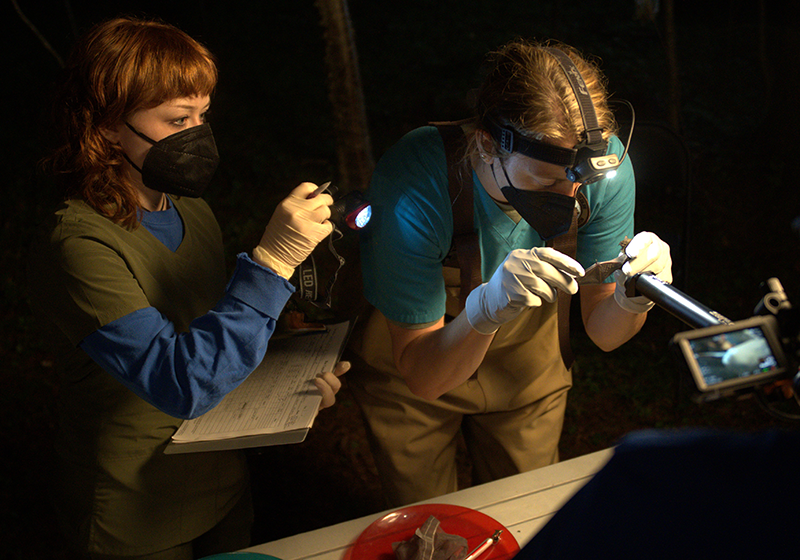
Hands-on rehabilitation is just one aspect of the college’s Wildlife Biology program. Students also work with animal ambassadors, animals who, due to long-term injury or human habituation, can no longer survive and thrive in the wild. These creatures, which range from eastern indigo snakes to red-tailed hawks, become permanent residents at the May Wildlife Rehabilitation Center, and assist students when they give community presentations about the importance of protecting local wildlife.
With their passion for education, Hooper decided to lean into this aspect of the program and couple it with the college’s Elementary Education minor. They said that despite taking an unconventional academic path, their professors worked hard to understand their professional goals—which did not include leading a traditional elementary school classroom—and even tweaked assignments and projects to better prepare them for the wildlife and animal education careers they were interested in.
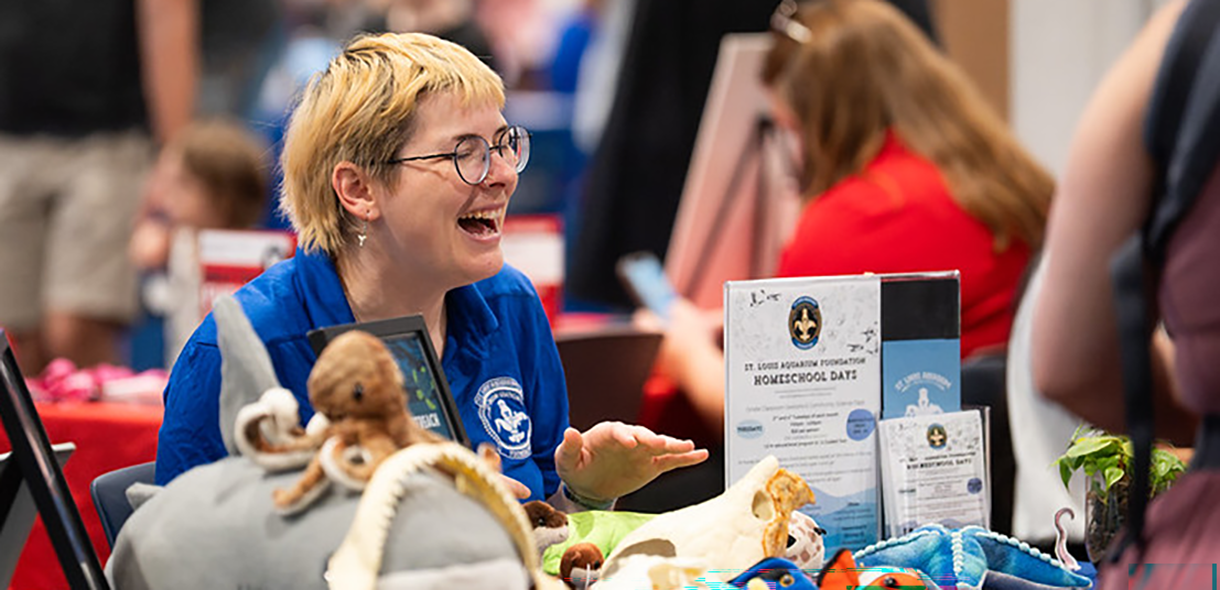
Eventually, that academic foundation paid off, when they landed their current role as education manager for the St. Louis Aquarium Foundation in St. Louis, Missouri. There Hooper runs the aquarium’s education department, helping the organization achieve its goal of creating access for all.
“Making sure that students in St. Louis can still experience something like this without the responsibility of paying falling on their families or on their schools was a really high priority for the founders, so they created the non-profit,” Hooper said. “Doing my education minor [was helpful]. If I was doing a lesson plan, I had to know, ‘Is this accessible for kids who are color blind? Is this accessible for kids who are on the autism spectrum? Is this something a deaf student could still participate in?’ When I’m doing these curriculum edits, or if we’re building a new program, I’m making sure that when we say, ‘access for all,’ that it is actually access for all. That was a huge part of my education minor specifically.”
Although they now work in a career that perfectly combines their passions for wildlife and education, Hooper said it did take some trial and error to find their niche. The one-on-one, collaborative relationship they were able to build with their professors at Lees-McRae, and the space they gave themself to take a step back and pivot when necessary, allowed Hooper to land what has become a dream role.
“It’s very cliche, but for anybody you ask who is in the education field, seeing that spark is always going to be [so fulfilling],” Hooper said. “Seeing that click of engagement, that is so exciting for me, and I feel very privileged to be able to experience that moment and witness that pretty much every single day.”