
Mill Pond Revitalization
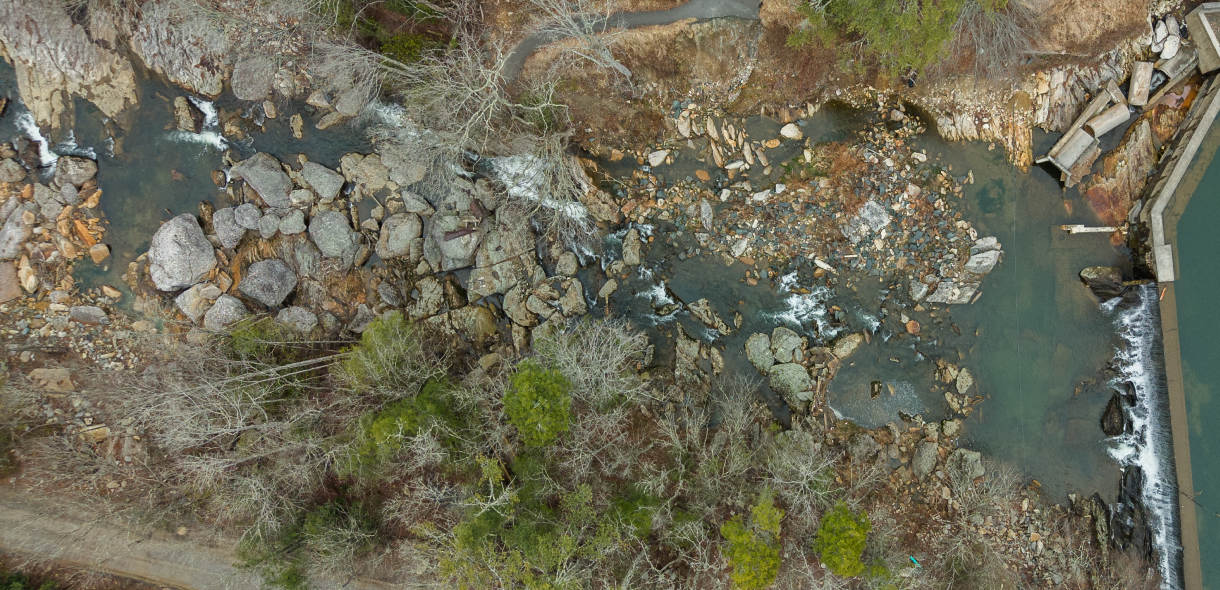
The Mill Pond sits at the entrance to Lees-McRae College and the Town of Banner Elk at the confluence of the Elk River and Shawneehaw Creek. Samuel Banner built the first dam in the area in the late 1800s, followed by a later series of dams used to generate hydroelectric power for the college and the community.
For more than a decade, this college-owned property has been studied for enhanced educational and recreational opportunities. These plans were accelerated following the devasting effects of Hurricane Helene storm damage to college and town infrastructure.
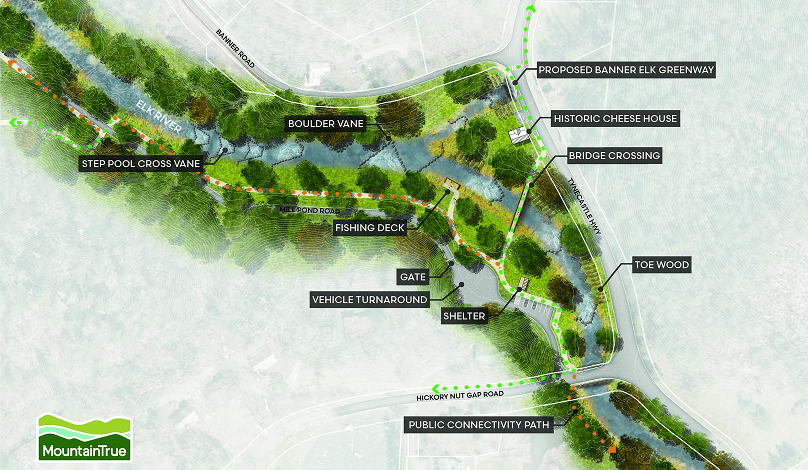
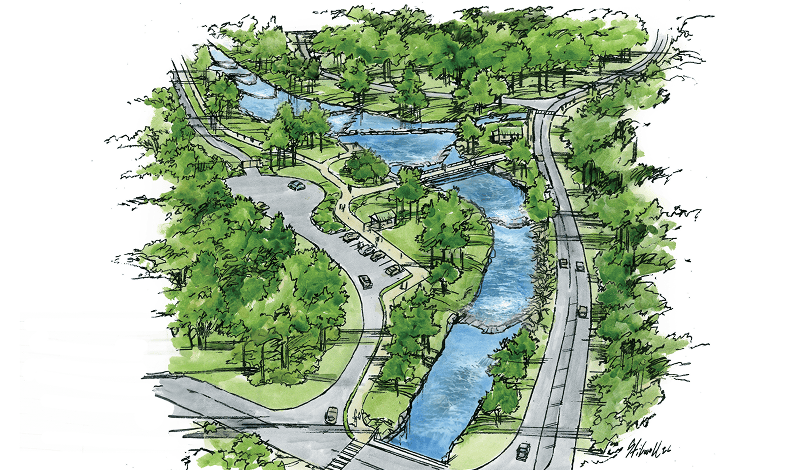
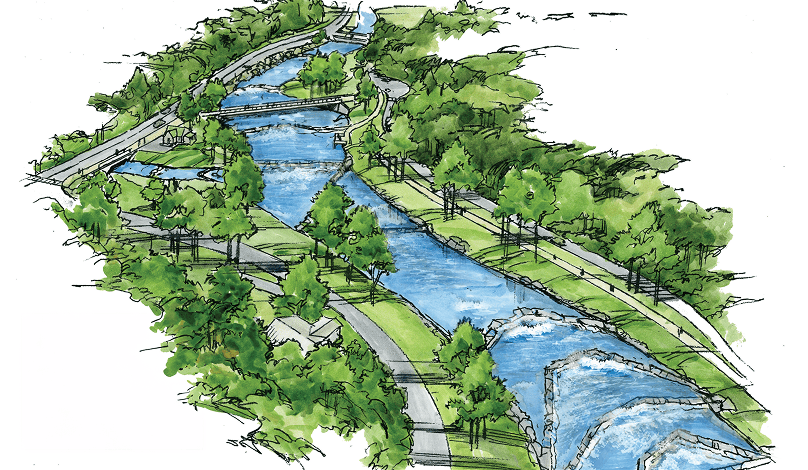
Conceptual Site Plan
FAQ
While currently stable, the dam is at risk of future collapse if it is not repaired, replaced, or removed.
The college has partnered with environmental advocacy organization MountainTrue to best understand the research and professional consensus surrounding dam repair versus dam removal. When dams are removed it restores the natural river flow, which studies show can improve water quality and ecosystem health, create new wildlife habitats, increase flood resistance, and reduce long-term maintenance needs to the area.
Although removal is less expensive than rebuilding, the decision is driven by environmental and safety benefits, not cost alone.
Instead of a pond, the area will return to a free-flowing stream. The area will be restored to a more natural river system with natural riverbanks, native vegetation, and rock structures to stabilize flow. This improved environment will create a healthier habitat for fish and wildlife who live in and around the stream.
Yes. This project is designed to enhance outdoor recreation. Fishing access, walking paths and greenway connections, picnic and gathering spaces, and river access for wading will increase recreational access for the local and college community.
With enhanced recreational opportunities, the college foresees a need for additional parking and vehicle access. Plans to address these concerns are ongoing, but initial strategies include collaborating with local transportation agencies to evaluate traffic patterns, designing parking areas dedicated to stream access, and communicating the use of nearby parking and walking options to the community.
Details about traffic and parking developments will continue to be addressed in detailed design phases.The project will benefit the many species of wildlife who call this habitat home by restoring the stream’s natural flow and improving water temperature and oxygen levels. It will specifically support species like trout, mussels, and other native aquatic life by restoring fish passage and creating habitat connectivity.
Many of the birds currently living in the Mill Pond are domestic animals that have been abandoned. These animals will be safely relocated to domestic waterfowl sanctuaries, while native wildlife will naturally adapt to the restored river.
Once the stream is restored, the area will be less attractive for animal dumping, hopefully preventing future abandonment.This project will create a safer, more resilient river system for both wildlife and the local community. With new recreational and educational opportunities, the college envisions this area as a vibrant community gathering space that will protect local infrastructure and natural resources.
Interested in sharing your thoughts?
We would love to hear your feedback, concerns, or suggestions regarding the Mill Pond Revitalization. Please use the form below to share your thoughts.